Showing posts with label Holden. Show all posts

Wednesday, March 28, 2012

1967 Holden

Correcting the HD’s flaws, the HR has been introduced in 1966. In June 1967, two new performance options become available in the form of a 3.0-litre “S” engine - which takes over from the “X2” with a similar output of 145 bhp - and a four-speed manual gearbox with a floor-mounted lever, provided courtesy of Opel.


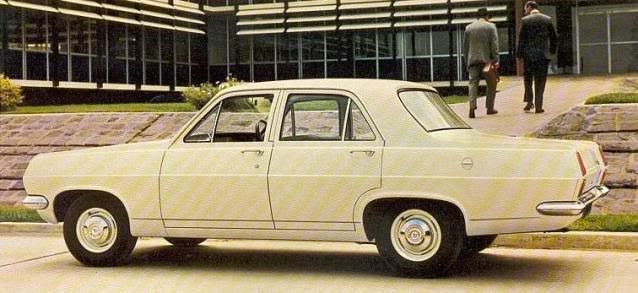
Holden Standard
The Standard is again Holden’s cheapest offer, mostly bought by fleet operators and a few cost-conscious individuals.
Photobucket
● Introduction: February 1965 as the HD, April 1966 as the HR. Construction: monocoque. Engine: water-cooled inline six, 2.6-litre, 108 hp, mounted at the front. Optional engines: inline six, 2.6-litre, 114 hp; inline six, 3.0-litre, 126 hp; and inline six, 3.0-litre, 145 hp. Transmission: to the rear wheels through a three-speed manual gearbox. Four-speed manual and two-speed automatic gearbox optional (four-speed only with 145 hp engine). Suspension: independent at the front, rigid axle at the rear. Brakes: hydraulic, to drums on all four wheels, with servo. Disks optional at the front. Length: 458 cm (station sedan), 460 cm (sedan). Top speed: 150 to 155 kph. Range: four-door sedan, four-door station sedan.


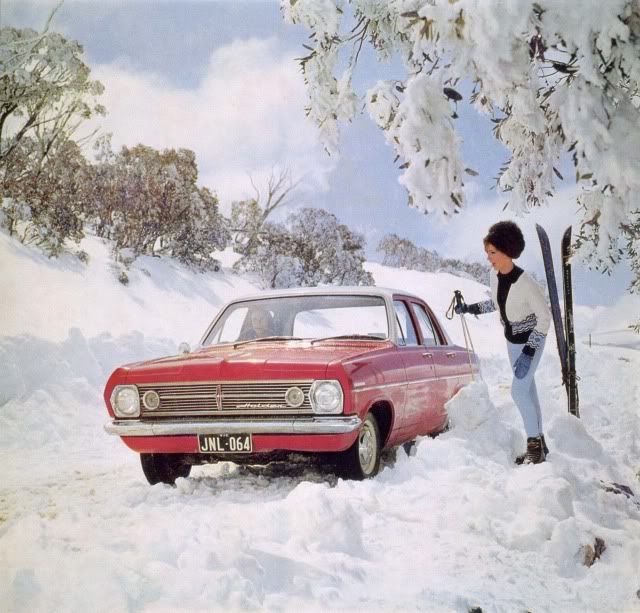
Holden Special
The mid-range Special continues to guarantee to Holden the bulk of its sales.
Photobucket
● Introduction: February 1965 as the HD, April 1966 as the HR. Construction: monocoque. Engine: water-cooled inline six, 2.6-litre, 108 hp, mounted at the front. Optional engines: inline six, 2.6-litre, 114 hp; inline six, 3.0-litre, 126 hp; and inline six, 3.0-litre, 145 hp. Transmission: to the rear wheels through a three-speed manual gearbox. Four-speed manual and two-speed automatic gearbox optional (four-speed only with 145 hp engine). Suspension: independent at the front, rigid axle at the rear. Brakes: hydraulic, to drums on all four wheels, with servo. Disks optional at the front. Length: 458 cm (station sedan), 460 cm (sedan). Top speed: 150 to 155 kph. Range: four-door sedan, four-door station sedan.


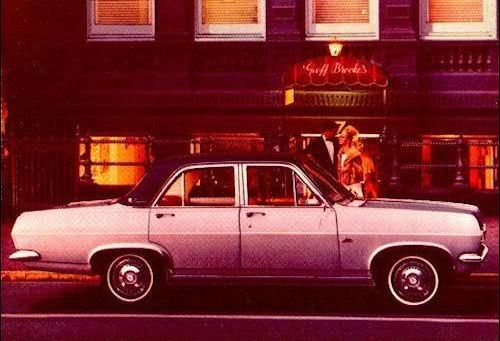
Holden Premier
Holden’s luxury offer loses most its pride as it is seriously downgraded with the introduction of the HD. Gone are such equipments as the standard automatic transmission or the leather seats (replaced by a plebeian “Morrokide” synthetic upholstery) which used to set the Premier apart.
Photobucket
● Introduction: February 1965 as the HD, April 1966 as the HR. Construction: monocoque. Engine: water-cooled inline six, 3.0-litre, 126 hp, mounted at the front. Optional engine: inline six, 3.0-litre, 145 hp. Transmission: to the rear wheels through a three-speed manual gearbox. Four-speed manual and two-speed automatic gearbox optional (four-speed only with 145 hp engine). Suspension: independent at the front, rigid axle at the rear. Brakes: hydraulic, to drums on all four wheels, with servo. Disks optional at the front. Length: 458 cm (station sedan), 460 cm (sedan). Top speed: 150 to 155 kph. Range: four-door sedan, four-door station sedan.


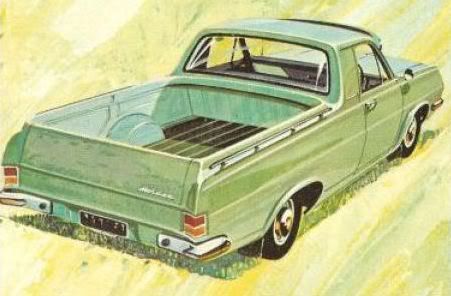
Holden Commercial
Photobucket
● Introduction: July 1965 as the HD, April 1966 as the HR. Construction: monocoque. Engine: water-cooled inline six, 2.6-litre, 108 hp, mounted at the front. Optional engines: inline six, 2.6-litre, 114 hp; inline six, 3.0-litre, 126 hp; and inline six, 3.0-litre, 145 hp. Transmission: to the rear wheels through a three-speed manual gearbox. Two-speed automatic gearbox optional. Suspension: independent at the front, rigid axle at the rear. Brakes: hydraulic, to drums on all four wheels, with servo. Disks optional at the front. Length: 458 cm. Top speed: 150 to 155 kph. Range: two-door utility pickup, two-door panel van.


Any mistake you’ve just spotted? A detail to add? A suggestion? Don’t hesitate to leave a comment!

Click to jump to another model year of the same car: 196519661967 – 1968
Click here to return to a list of all Holden vehicles presented on this blog.
Click here to return to this blog’s initial post, featuring a list of all vehicles already presented.


1966 Holden

Holden had decided not to rest on its laurels, and has unveiled the brand new HD just two years after the EJ/EH has been introduced. Both styling and equipments have been carefully improved over the previous models, and these efforts generate strong sales during the very first months of the car’s existence, but unfortunately soon plummet. This reversal of fortune puzzles Holden’s management. Among many other possible reasons, some question the cleverness of the front wings, which extend so much forward that they render the bumpers useless and make themselves prone to damage in heavy traffic or while parking. Holden has decided to react and is presently studying a corrected version of the HD, to be put into production as soon as possible. It finally hits the market in April 1966 as the HR.


Holden Standard
The Standard is again Holden’s cheapest offer, mostly bought by fleet operators and a few cost-conscious individuals.
Photobucket
● Introduction: February 1965. Construction: monocoque. Engine: water-cooled inline six, 2.4-litre, 95 hp, mounted at the front. Optional engines: inline six, 2.4-litre, 100 hp; inline six, 2.9-litre, 115 hp; and inline six, 2.9-litre, 140 hp. Transmission: to the rear wheels through a three-speed manual gearbox. Two-speed automatic gearbox optional. Suspension: independent at the front, rigid axle at the rear. Brakes: hydraulic, to drums on all four wheels, with servo. Disks optional at the front. Length: 457 cm. Top speed: 135 to 155 kph. Range: four-door sedan, four-door station sedan.


Holden Special
The mid-range Special continues to guarantee to Holden the bulk of its sales.
Photobucket
● Introduction: February 1965. Construction: monocoque. Engine: water-cooled inline six, 2.4-litre, 95 hp, mounted at the front. Optional engines: inline six, 2.4-litre, 100 hp; inline six, 2.9-litre, 115 hp; and inline six, 2.9-litre, 140 hp. Transmission: to the rear wheels through a three-speed manual gearbox. Two-speed automatic gearbox optional. Suspension: independent at the front, rigid axle at the rear. Brakes: hydraulic, to drums on all four wheels, with servo. Disks optional at the front. Length: 457 cm. Top speed: 135 to 155 kph. Range: four-door sedan, four-door station sedan.


Holden Premier
Holden’s luxury offer loses most its pride as it is seriously downgraded with the introduction of the HD. Gone are such equipments as the standard automatic transmission or the leather seats (replaced by a plebeian “Morrokide” synthetic upholstery) which used to set the Premier apart.
Photobucket
● Introduction: February 1965. Construction: monocoque. Engine: water-cooled inline six, 2.9-litre, 115 hp, mounted at the front. Optional engine: inline six, 2.9-litre, 140 hp. Transmission: to the rear wheels through a three-speed manual gearbox. Two-speed automatic gearbox optional. Suspension: independent at the front, rigid axle at the rear. Brakes: hydraulic, to drums on all four wheels, with servo. Disks optional at the front. Length: 457 cm. Top speed: 145 kph to 155 kph. Range: four-door sedan, four-door station sedan.


Holden Commercial
As it is the habit at Holden’s, the commercial vehicles based on the new model have been introduced a few months after the passenger versions.
Photobucket
● Introduction: July 1965. Construction: monocoque. Engine: water-cooled inline six, 2.4-litre, 95 hp, mounted at the front. Optional engines: inline six, 2.4-litre, 100 hp; inline six, 2.9-litre, 115 hp; and inline six, 2.9-litre, 140 hp. Transmission: to the rear wheels through a three-speed manual gearbox. Two-speed automatic gearbox optional. Suspension: independent at the front, rigid axle at the rear. Brakes: hydraulic, to drums on all four wheels, with servo. Disks optional at the front. Length: 457 cm. Top speed: 135 to 155 kph. Range: two-door utility pickup, two-door panel van.


Holden HR Standard
A strong rebuff to Australian pride, the HD’s disputed styling is corrected by a Detroit team in order to stop the car’s sales slide. The resulting vehicle is the facelifted HR. Furthermore, engine capacities have been increased, while some welcomed equipments (optional power steering, front seatbelts, limited slip differential) have been added.
● Introduction: February 1965 as the HD, April 1966 as the HR. Construction: monocoque. Engine: water-cooled inline six, 2.6-litre, 108 hp, mounted at the front. Optional engines: inline six, 2.6-litre, 114 hp; inline six, 3.0-litre, 126 hp; and inline six, 3.0-litre, 145 hp. Transmission: to the rear wheels through a three-speed manual gearbox. Two-speed automatic gearbox optional. Suspension: independent at the front, rigid axle at the rear. Brakes: hydraulic, to drums on all four wheels, with servo. Disks optional at the front. Length: 458 cm (station sedan), 460 cm (sedan). Top speed: 150 to 155 kph. Range: four-door sedan, four-door station sedan.


Holden HR Special
Photobucket
● Introduction: February 1965 as the HD, April 1966 as the HR. Construction: monocoque. Engine: water-cooled inline six, 2.6-litre, 108 hp, mounted at the front. Optional engines: inline six, 2.6-litre, 114 hp; inline six, 3.0-litre, 126 hp; and inline six, 3.0-litre, 145 hp. Transmission: to the rear wheels through a three-speed manual gearbox. Two-speed automatic gearbox optional. Suspension: independent at the front, rigid axle at the rear. Brakes: hydraulic, to drums on all four wheels, with servo. Disks optional at the front. Length: 458 cm (station sedan), 460 cm (sedan). Top speed: 150 to 155 kph. Range: four-door sedan, four-door station sedan.


Holden HR Premier
Photobucket
● Introduction: February 1965 as the HD, April 1966 as the HR. Construction: monocoque. Engine: water-cooled inline six, 3.0-litre, 126 hp, mounted at the front. Optional engine: inline six, 3.0-litre, 145 hp. Transmission: to the rear wheels through a three-speed manual gearbox. Two-speed automatic gearbox optional. Suspension: independent at the front, rigid axle at the rear. Brakes: hydraulic, to drums on all four wheels, with servo. Disks optional at the front. Length: 458 cm (station sedan), 460 cm (sedan). Top speed: 150 to 155 kph. Range: four-door sedan, four-door station sedan.


Holden HR Commercial
Photobucket
● Introduction: July 1965 as the HD, April 1966 as the HR. Construction: monocoque. Engine: water-cooled inline six, 2.6-litre, 108 hp, mounted at the front. Optional engines: inline six, 2.6-litre, 114 hp; inline six, 3.0-litre, 126 hp; and inline six, 3.0-litre, 145 hp. Transmission: to the rear wheels through a three-speed manual gearbox. Two-speed automatic gearbox optional. Suspension: independent at the front, rigid axle at the rear. Brakes: hydraulic, to drums on all four wheels, with servo. Disks optional at the front. Length: 458 cm. Top speed: 150 to 155 kph. Range: two-door utility pickup, two-door panel van.


Any mistake you’ve just spotted? A detail to add? A suggestion? Don’t hesitate to leave a comment!

Click to jump to another model year of the same car: 196519661967 – 1968
Click here to return to a list of all Holden vehicles presented on this blog.
Click here to return to this blog’s initial post, featuring a list of all vehicles already presented.


1965 Holden

The EJ has enjoyed a very short production run before being upgraded to the EH, in which the old “Grey” six which powered all Holdens since the very first 48/215 has been superseded by a modern “Red” engine, which finally offers the performances the big Holden deserves. In February 1965, the EH in turn gives way to the HD. Holden has decided not to rest on its laurels, and unveils the brand new car just two years after the EJ/EH has been introduced. Both styling and equipments have been carefully improved over the previous models, and these efforts generate strong sales during the very first months of the car’s existence. Among many new equipments, the HD can be fitted with an optional, performance-oriented “X2” engine. This comes with specific instruments and gauges added to the dashboard.


Holden Standard
The entry-level offering remains the Standard.
● Introduction: July 1962 as the EJ, August 1963 as the updated EH. Construction: monocoque. Engine: water-cooled inline six, 2.4-litre, 95 hp, mounted at the front. Optional engines: inline six, 2.4-litre, 100 hp; and inline six, 2.9-litre, 115 hp. Transmission: to the rear wheels through a three-speed manual gearbox. Three-speed automatic gearbox optional with 2.4-litre, standard with 2.9-litre. Suspension: independent at the front, rigid axle at the rear. Brakes: hydraulic, to drums on all four wheels, with servo. Length: 451 cm. Top speed: 135 kph (2.4-litre) to 155 kph (2.9-litre). Range: four-door sedan, four-door station sedan.


Holden Special
This Special used to be Holden’s top-of-the-line model, but has now lost this honour to the new Premier. It is still a very desirable car to the eyes of an Australian motorist.
Photobucket
● Introduction: July 1962 as the EJ, August 1963 as the updated EH. Construction: monocoque. Engine: water-cooled inline six, 2.4-litre, 95 hp, mounted at the front. Optional engines: inline six, 2.4-litre, 100 hp; and inline six, 2.9-litre, 115 hp. Transmission: to the rear wheels through a three-speed manual gearbox. Three-speed automatic gearbox optional with 2.4-litre, standard with 2.9-litre. Suspension: independent at the front, rigid axle at the rear. Brakes: hydraulic, to drums on all four wheels, with servo. Length: 451 cm. Top speed: 135 kph (2.4-litre) to 155 kph (2.9-litre). Range: four-door sedan, four-door station sedan.


Holden S4
Basing it on the Special, Holden releases a low-volume, performance-oriented machine. Racing and heavy-duty parts enhance the engine, the transmission, the brakes and the suspension, making the S4 a very potent vehicle. Entered at the annual Bathurst production cars race, the S4 fails to win, but nonetheless displays a serious potential.
● Introduction: September 1963. Construction: monocoque. Engine: water-cooled inline six, 2.9-litre, 115 hp, mounted at the front. Transmission: to the rear wheels through a three-speed manual gearbox. Suspension: independent at the front, rigid axle at the rear. Brakes: hydraulic, to drums on all four wheels. Length: 451 cm. Top speed: 155 kph. Range: four-door sedan.


Holden Premier
The Premier is Holden’s luxury offer, featuring a large six-cylinder engine, automatic transmission and leather seats as standard equipments. It is now available as an estate.
Photobucket
● Introduction: July 1962 as the EJ, August 1963 as the updated EH. Construction: monocoque. Engine: water-cooled inline six, 2.9-litre, 115 hp, mounted at the front. Transmission: to the rear wheels through a three-speed automatic gearbox. Suspension: independent at the front, rigid axle at the rear. Brakes: hydraulic, to drums on all four wheels, with servo. Length: 455 cm. Top speed: 155 kph. Range: four-door sedan, four-door station sedan.


Holden Commercial
Holden’s pickup and panel van versions received the same improvements as the rest of the manufacturer’s range.
Photobucket
● Introduction: July 1962 as the EJ, August 1963 as the updated EH. Construction: monocoque. Engine: water-cooled inline six, 2.4-litre, 95 hp, mounted at the front. Optional engines: inline six, 2.4-litre, 100 hp; and inline six, 2.9-litre, 115 hp. Transmission: to the rear wheels through a three-speed manual gearbox. Three-speed automatic gearbox optional with 2.4-litre, standard with 2.9-litre. Suspension: independent at the front, rigid axle at the rear. Brakes: hydraulic, to drums on all four wheels, with servo. Length: 451 cm. Top speed: 135 kph (2.4-litre) to 155 kph (2.9-litre). Range: two-door utility pickup, two-door panel van.


Holden HD Standard
The HD offers a range similar to the EH’s, except for the disappearance of the performance-oriented S4, which the addition of the “X2” engine rendered useless, and the traditionally delayed introduction of the commercial line. The automatic Hydramatic is replaced by another transmission specially imported from the United States, the two-speed Powerglide, while front disk brakes are now made available as an option. The Standard is again Holden’s cheapest offer, mostly bought by fleet operators and a few cost-conscious individuals.
Photobucket
● Introduction: February 1965. Construction: monocoque. Engine: water-cooled inline six, 2.4-litre, 95 hp, mounted at the front. Optional engines: inline six, 2.4-litre, 100 hp; inline six, 2.9-litre, 115 hp; and inline six, 2.9-litre, 140 hp. Transmission: to the rear wheels through a three-speed manual gearbox. Two-speed automatic gearbox optional. Suspension: independent at the front, rigid axle at the rear. Brakes: hydraulic, to drums on all four wheels, with servo. Disks optional at the front. Length: 457 cm. Top speed: 135 to 155 kph. Range: four-door sedan, four-door station sedan.


Holden HD Special
The mid-range Special continues to guarantee to Holden the bulk of its sales.
Photobucket
● Introduction: February 1965. Construction: monocoque. Engine: water-cooled inline six, 2.4-litre, 95 hp, mounted at the front. Optional engines: inline six, 2.4-litre, 100 hp; inline six, 2.9-litre, 115 hp; and inline six, 2.9-litre, 140 hp. Transmission: to the rear wheels through a three-speed manual gearbox. Two-speed automatic gearbox optional. Suspension: independent at the front, rigid axle at the rear. Brakes: hydraulic, to drums on all four wheels, with servo. Disks optional at the front. Length: 457 cm. Top speed: 135 to 155 kph. Range: four-door sedan, four-door station sedan.


Holden HD Premier
Holden’s luxury offer loses most its pride as it is seriously downgraded with the introduction of the HD. Gone are such equipments as the standard automatic transmission or the leather seats (replaced by a plebeian “Morrokide” synthetic upholstery) which used to set the Premier apart.
Photobucket
● Introduction: February 1965. Construction: monocoque. Engine: water-cooled inline six, 2.9-litre, 115 hp, mounted at the front. Optional engine: inline six, 2.9-litre, 140 hp. Transmission: to the rear wheels through a three-speed manual gearbox. Two-speed automatic gearbox optional. Suspension: independent at the front, rigid axle at the rear. Brakes: hydraulic, to drums on all four wheels, with servo. Disks optional at the front. Length: 457 cm. Top speed: 145 kph to 155 kph. Range: four-door sedan, four-door station sedan.


Any mistake you’ve just spotted? A detail to add? A suggestion? Don’t hesitate to leave a comment!

Click to jump to another model year of the same car: 196319641965
Or click to see another model year of the new generation of Holden cars: 196519661967 – 1968
Click here to return to a list of all Holden vehicles presented on this blog.
Click here to return to this blog’s initial post, featuring a list of all vehicles already presented.


1964 Holden

The EJ has enjoyed a very short production run before being upgraded to the present EH. The modifications extend to the whole car, inside and out. The roofline and other stylistic details have been modified, while the old “Grey” six which powered all Holdens since the very first 48/215 is now superseded by a modern “Red” engine, which finally offers the performances the big Holden deserves.


Holden Standard
The entry-level offering remains the Standard.
Photobucket
● Introduction: July 1962 as the EJ, August 1963 as the updated EH. Construction: monocoque. Engine: water-cooled inline six, 2.4-litre, 95 hp, mounted at the front. Optional engines: inline six, 2.4-litre, 100 hp; and inline six, 2.9-litre, 115 hp. Transmission: to the rear wheels through a three-speed manual gearbox. Three-speed automatic gearbox optional with 2.4-litre, standard with 2.9-litre. Suspension: independent at the front, rigid axle at the rear. Brakes: hydraulic, to drums on all four wheels, with servo. Length: 451 cm. Top speed: 135 kph (2.4-litre) to 155 kph (2.9-litre). Range: four-door sedan, four-door station sedan.


Holden Special
This Special used to be Holden’s top-of-the-line model, but has now lost this honour to the new Premier. It is still a very desirable car to the eyes of an Australian motorist.
Photobucket
● Introduction: July 1962 as the EJ, August 1963 as the updated EH. Construction: monocoque. Engine: water-cooled inline six, 2.4-litre, 95 hp, mounted at the front. Optional engines: inline six, 2.4-litre, 100 hp; and inline six, 2.9-litre, 115 hp. Transmission: to the rear wheels through a three-speed manual gearbox. Three-speed automatic gearbox optional with 2.4-litre, standard with 2.9-litre. Suspension: independent at the front, rigid axle at the rear. Brakes: hydraulic, to drums on all four wheels, with servo. Length: 451 cm. Top speed: 135 kph (2.4-litre) to 155 kph (2.9-litre). Range: four-door sedan, four-door station sedan.


Holden S4
Basing it on the Special, Holden releases a low-volume, performance-oriented machine. Racing and heavy-duty parts enhance the engine, the transmission, the brakes and the suspension, making the S4 a very potent vehicle. Entered at the annual Bathurst production cars race, the S4 fails to win, but nonetheless displays a serious potential.
● Introduction: September 1963. Construction: monocoque. Engine: water-cooled inline six, 2.9-litre, 115 hp, mounted at the front. Transmission: to the rear wheels through a three-speed manual gearbox. Suspension: independent at the front, rigid axle at the rear. Brakes: hydraulic, to drums on all four wheels. Length: 451 cm. Top speed: 155 kph. Range: four-door sedan.


Holden Premier
The Premier is Holden’s luxury offer, featuring a large six-cylinder engine, automatic transmission and leather seats as standard equipments. It is now available as an estate.
Photobucket
● Introduction: July 1962 as the EJ, August 1963 as the updated EH. Construction: monocoque. Engine: water-cooled inline six, 2.9-litre, 115 hp, mounted at the front. Transmission: to the rear wheels through a three-speed automatic gearbox. Suspension: independent at the front, rigid axle at the rear. Brakes: hydraulic, to drums on all four wheels, with servo. Length: 455 cm. Top speed: 155 kph. Range: four-door sedan, four-door station sedan.


Holden Commercial
Holden’s pickup and panel van versions received the same improvements as the rest of the manufacturer’s range.
Photobucket
● Introduction: July 1962 as the EJ, August 1963 as the updated EH. Construction: monocoque. Engine: water-cooled inline six, 2.4-litre, 95 hp, mounted at the front. Optional engines: inline six, 2.4-litre, 100 hp; and inline six, 2.9-litre, 115 hp. Transmission: to the rear wheels through a three-speed manual gearbox. Three-speed automatic gearbox optional with 2.4-litre, standard with 2.9-litre. Suspension: independent at the front, rigid axle at the rear. Brakes: hydraulic, to drums on all four wheels, with servo. Length: 451 cm. Top speed: 135 kph (2.4-litre) to 155 kph (2.9-litre). Range: two-door utility pickup, two-door panel van.


Any mistake you’ve just spotted? A detail to add? A suggestion? Don’t hesitate to leave a comment!

Click to jump to another model year of the same car: 196319641965
Click here to return to a list of all Holden vehicles presented on this blog.
Click here to return to this blog’s initial post, featuring a list of all vehicles already presented.


1963 Holden

Holden now has a car for the Sixties: gone is the EK, the last incarnation of the FE originally launched in 1956. In its place now stands the EJ, an automobile designed as a typical Australian saloon, not a shrunk American sedan as the FE has been. This new approach seems a clever in order to counter Holden’s challengers, the Ford Falcon and the Chrysler Valiant, both based on the newest compact designs originated in the United States.

Once again this year, the entry-level offering is the Standard, though its place as the mainstream Holden model is now taken by the Special, pushing it down as the car of choice for taxi and other fleet operators.


Holden Standard
Based on the German Opel Kapitän, the EJ looks lower and wider, and many small improvements in its equipment help make forget the rather utilitarian appearance of the original Holdens. “Hydramatic” automatic transmission is now available throughout the range, and standard power brakes are a welcome addition. Lift the bonnet, and the EJ looks rather like the previous FE/EK, though.
● Introduction: July 1962. Construction: monocoque. Engine: water-cooled inline six, 2.3-litre, 75 hp, mounted at the front. Transmission: to the rear wheels through a three-speed manual gearbox. Three-speed automatic gearbox optional. Suspension: independent at the front, rigid axle at the rear. Brakes: hydraulic, to drums on all four wheels, with servo. Length: 449 cm. Top speed: 130 kph. Range: four-door sedan, four-door station sedan.


Holden Special
This Special used to be Holden’s top-of-the-line model, but has now lost this honour to the new Premier. It is still a very desirable car to the eyes of an Australian motorist.
Photobucket
● Introduction: July 1962. Construction: monocoque. Engine: water-cooled inline six, 2.3-litre, 75 hp, mounted at the front. Transmission: to the rear wheels through a three-speed manual gearbox. Three-speed automatic gearbox optional. Suspension: independent at the front, rigid axle at the rear. Brakes: hydraulic, to drums on all four wheels, with servo. Length: 449 cm. Top speed: 130 kph. Range: four-door sedan, four-door station sedan.


Holden Premier
Available only as a saloon, the new luxury Premier offers such refinements as separate leather seats rather than the bench-type ones used on lesser models, a centre console and an array of minor additional equipments.
Photobucket
● Introduction: July 1962. Construction: monocoque. Engine: water-cooled inline six, 2.3-litre, 75 hp, mounted at the front. Transmission: to the rear wheels through a three-speed manual gearbox. Three-speed automatic gearbox optional. Suspension: independent at the front, rigid axle at the rear. Brakes: hydraulic, to drums on all four wheels, with servo. Length: 449 cm. Top speed: 130 kph. Range: four-door sedan.


Holden Commercial
The range of commercial vehicles Holden based on its passenger cars again includes a pickup and a panel van, introduced a few months after the rest of the line-up.
Photobucket
● Introduction: January 1963. Construction: monocoque. Engine: water-cooled inline six, 2.3-litre, 75 hp, mounted at the front. Transmission: to the rear wheels through a three-speed manual gearbox. Three-speed automatic gearbox optional. Suspension: independent at the front, rigid axle at the rear. Brakes: hydraulic, to drums on all four wheels, with servo. Length: 449 cm. Top speed: 130 kph. Range: two-door utility pickup, two-door panel van.


Any mistake you’ve just spotted? A detail to add? A suggestion? Don’t hesitate to leave a comment!

Click to jump to another model year of the same car: 196319641965
Click here to return to a list of all Holden vehicles presented on this blog.
Click here to return to this blog’s initial post, featuring a list of all vehicles already presented.


1962 Holden

The protracted dream of a mass-produced Australian automobile has become reality on October 1, 1948, when the very first Holden 48-215 left the assembly line. This car has enjoyed a tremendous response from the Australian public. Its success is still very much alive, Holden holding approximately half of the Australian car market. Nevertheless, it now has to face new challenges from General Motors’ archrivals, Ford and Chrysler.


Holden Standard
The Holden FB has not lived long before being succeeded by yet another derivative of the original FE from 1956. Apart from styling changes, the EK now enjoys electric windshield wipers on all models.
Photobucket
● Introduction: July 1956 as the FE, May 1961 as the EK. Construction: monocoque. Engine: water-cooled inline six, 2.3-litre, 75 hp, mounted at the front. Transmission: to the rear wheels through a three-speed manual gearbox. Suspension: independent at the front, rigid axle at the rear. Brakes: hydraulic, to drums on all four wheels. Length: 462 cm. Top speed: 130 kph. Range: four-door sedan, four-door station sedan.


Holden Special
The Special is a fancier version of the EK, which benefits from an improved equipment, more chrome, and two-tone paint and upholstery. The EK has also introduced a GM Hydramatic automatic transmission imported from the United States, available as an option.
Photobucket
● Introduction: July 1956 as the FE, May 1961 as the EK. Construction: monocoque. Engine: water-cooled inline six, 2.3-litre, 75 hp, mounted at the front. Transmission: to the rear wheels through a three-speed manual gearbox. Three-speed automatic gearbox optional. Suspension: independent at the front, rigid axle at the rear. Brakes: hydraulic, to drums on all four wheels. Length: 462 cm. Top speed: 130 kph. Range: four-door sedan, four-door station sedan.


Holden Commercial
The EK Commercial series gathers the “Utility” or “Ute”, a pickup that has already proved very popular in rural areas, and a panel van variant. This line did not benefit from all the cosmetic improvements enjoyed by the other EK models, as most of these cars’ rear part remains unchanged.
Photobucket
● Introduction: February 1957 as the FE, May 1961 as the EK. Construction: monocoque. Engine: water-cooled inline six, 2.3-litre, 75 hp, mounted at the front. Transmission: to the rear wheels through a three-speed manual gearbox. Suspension: independent at the front, rigid axle at the rear. Brakes: hydraulic, to drums on all four wheels. Length: 462 cm. Top speed: 130 kph. Range: two-door Utility pickup, two-door panel van.


Any mistake you’ve just spotted? A detail to add? A suggestion? Don’t hesitate to leave a comment!

Click to jump to another model year of the same car: 1957 – 19581959 – 1960 – 19611962
Click here to return to a list of all Holden vehicles presented on this blog.
Click here to return to this blog’s initial post, featuring a list of all vehicles already presented.


1960 Holden

The protracted dream of a mass-produced Australian automobile has become reality on October 1, 1948, when the very first Holden 48-215 left the assembly line. This car has enjoyed a tremendous response from the Australian public. Its success is still very much alive, and now reaches beyond Australia’s borders: Holden cars are exported to New Zealand, South-East Asia, Africa and, starting this year, to the American state of Hawaii in a new left-hand drive version, while Ute pickups are assembled in South Africa and Indonesia as CKDs.


Holden Standard
In May 1958, the Holden FE has been superseded by a revised FC, which features a new grille, modified dashboard and steering wheel, and minor mechanical improvements. Nevertheless, the Holden FC remains the rugged vehicle that the Australians have been brought to love.
Photobucket
● Introduction: July 1956 as the FE, May 1958 as the FC. Construction: monocoque. Engine: water-cooled inline six, 2.2-litre, 72 hp, mounted at the front. Transmission: to the rear wheels through a three-speed manual gearbox. Suspension: independent at the front, rigid axle at the rear. Brakes: hydraulic, to drums on all four wheels. Length: 449 cm. Top speed: 140 kph. Range: four-door sedan, four-door station sedan.


Holden Business
The Business is a simplified version of the FC, that is mostly aimed at taxicab operators. It is exclusively available as a sedan.
● Introduction: July 1956 as the FE, May 1958 as the FC. Construction: monocoque. Engine: water-cooled inline six, 2.2-litre, 72 hp, mounted at the front. Transmission: to the rear wheels through a three-speed manual gearbox. Suspension: independent at the front, rigid axle at the rear. Brakes: hydraulic, to drums on all four wheels. Length: 449 cm. Top speed: 140 kph. Range: four-door sedan.


Holden Special
The Special is a fancier version of the FC, designed for those Australian drivers who find the Holden too austere. It enjoys many minor improvements and sports an elegant two-tone paint.
Photobucket
● Introduction: July 1956 as the FE, May 1958 as the FC. Construction: monocoque. Engine: water-cooled inline six, 2.2-litre, 72 hp, mounted at the front. Transmission: to the rear wheels through a three-speed manual gearbox. Suspension: independent at the front, rigid axle at the rear. Brakes: hydraulic, to drums on all four wheels. Length: 449 cm. Top speed: 140 kph. Range: four-door sedan, four-door station sedan.


Holden Commercial
The FC Commercial series gathers the “Utility” or “Ute”, a pickup that has already proved very popular in rural areas, and a panel van variant.
Photobucket
● Introduction: February 1957 as the FE, May 1958 as the FC. Construction: monocoque. Engine: water-cooled inline six, 2.2-litre, 72 hp, mounted at the front. Transmission: to the rear wheels through a three-speed manual gearbox. Suspension: independent at the front, rigid axle at the rear. Brakes: hydraulic, to drums on all four wheels. Length: 449 cm. Top speed: 140 kph. Range: two-door Utility pickup, two-door panel van.


Holden FB
In January 1960, the Holden gets even more Americanized with the introduction of the Series FB, a heavier, longer, flashier evolution of the FC. Long fins are now incorporated to the rear part of the car, as well as ever more chrome. The new windshield is of “wraparound” type, and a new dashboard matches this fancy style. Alas, despite receiving a stronger suspension, more efficient brakes and a slightly enlarged engine, the Holden’s performances suffer from this sudden increase in weight. The range remains virtually the same as the FC’s, except for the deletion of the Business variant.
Photobucket
● Same as FC, except: Introduction: July 1956 as the FE, January 1960 as the FB. Engine: inline six, 2.3-litre, 75 hp. Length: 461 cm. Top speed: 130 kph.


Any mistake you’ve just spotted? A detail to add? A suggestion? Don’t hesitate to leave a comment!

Click to jump to another model year of the same car: 1957 – 19581959 – 1960 – 19611962
Click here to return to a list of all Holden vehicles presented on this blog.
Click here to return to this blog’s initial post, featuring a list of all vehicles already presented.


Friday, March 16, 2012

1956 Holden

The protracted dream of a mass-produced Australian automobile has become reality on October 1, 1948, when the very first Holden 48-215 left the assembly line. The car has enjoyed a tremendous response from the Australian public. In January 1956, the 100,000th FJ is produced, while Holden starts an offensive towards foreign markets: its products are now exported to New Zealand and several South-East Asian countries. The future seems bright for a company that is celebrating its 100th birthday.


Holden Standard
Initially launched in November 1948, the very first Australian-made automobile has now evolved into a less spartan FJ model. More chrome brightens the car on the outside, while the option list is lengthened. Nevertheless, it remains a rugged and simple vehicle, well suited for the task of coping with the hard local conditions.
Photobucket
● Introduction: November 1948 as the 48-215, since October 1953 as the FJ. Construction: unibody. Engine: water-cooled inline six, 2.2-litre, 60 hp, mounted at the front. Transmission: to the rear wheels through a three-speed manual gearbox. Suspension: independent at the front, solid axle at the rear. Brakes: hydraulic, to drums on all four wheels. Length: 440 cm. Top speed: 130 kph. Range: four-door sedan.


Holden Business
The Business is a simplified version of the FJ, that is mostly aimed at taxicab operators.
● Introduction: November 1948 for the original Holden, July 1953 as the 48-215 Business, since October 1953 as the FJ Business. Construction: unibody. Engine: water-cooled inline six, 2.2-litre, 60 hp, mounted at the front. Transmission: to the rear wheels through a three-speed manual gearbox. Suspension: independent at the front, solid axle at the rear. Brakes: hydraulic, to drums on all four wheels. Length: 440 cm. Top speed: 130 kph. Range: four-door sedan.


Holden Special
The Special is a version of the FJ designed for those Australian drivers who find the Holden too austere. To content them, a host of minor improvements have been added to the car, that is available with an elegant two-tone paint.
Photobucket
● Introduction: November 1948 for the original Holden, October 1953 as the FJ Special. Construction: unibody. Engine: water-cooled inline six, 2.2-litre, 60 hp, mounted at the front. Transmission: to the rear wheels through a three-speed manual gearbox. Suspension: independent at the front, solid axle at the rear. Brakes: hydraulic, to drums on all four wheels. Length: 440 cm. Top speed: 130 kph. Range: four-door sedan.


Holden Commercial
The Commercial series gathers the “Utility” or “Ute”, a pickup that has already proved very popular in rural areas, and a panel van variant.
Photobucket
● Introduction: November 1948 for the original Holden, January 1951 as the 50-2106, since October 1953 as the FJ Commercial. Construction: unibody. Engine: water-cooled inline six, 2.2-litre, 60 hp, mounted at the front. Transmission: to the rear wheels through a three-speed manual gearbox. Suspension: independent at the front, solid axle at the rear. Brakes: hydraulic, to drums on all four wheels. Length: 440 cm. Top speed: 130 kph. Range: two-door “Utility” pickup, two-door panel van.


Any mistake you’ve just spotted? A detail to add? A suggestion? Don’t hesitate to leave a comment!

Click to jump to another model year of the same car: 19491950195119521953195419551956
Click here to return to a list of all Holden vehicles presented on this blog.
Click here to return to this blog’s initial post, featuring a list of all vehicles already presented.


Thursday, March 15, 2012

1955 Holden

The protracted dream of a mass-produced Australian automobile has become reality on October 1, 1948, when the very first Holden 48-215 left the assembly line. The car has enjoyed a tremendous response from the Australian public. Two years ago, Holden has announced a new expansion plan, setting an annual production of 72,000 vehicles as its goal, and recently ground has broken for a brand new factory at Dandenong, Victoria. The construction of proving grounds in Lang Lang is also contemplated.


Holden Standard
Initially launched in November 1948, the very first Australian-made automobile has now evolved into a less spartan FJ model. More chrome brightens the car on the outside, while the option list is lengthened. Nevertheless, it remains a rugged and simple vehicle, well suited for the task of coping with the hard local conditions.
Photobucket
● Introduction: November 1948 as the 48-215, since October 1953 as the FJ. Construction: unibody. Engine: water-cooled inline six, 2.2-litre, 60 hp, mounted at the front. Transmission: to the rear wheels through a three-speed manual gearbox. Suspension: independent at the front, rigid axle at the rear. Brakes: hydraulic, to drums on all four wheels. Length: 440 cm. Top speed: 130 kph. Range: four-door sedan.


Holden Business
The Business is a simplified version of the FJ, that is mostly aimed at taxicab operators.
● Introduction: November 1948 for the original Holden, July 1953 as the 48-215 Business, since October 1953 as the FJ Business. Construction: unibody. Engine: water-cooled inline six, 2.2-litre, 60 hp, mounted at the front. Transmission: to the rear wheels through a three-speed manual gearbox. Suspension: independent at the front, rigid axle at the rear. Brakes: hydraulic, to drums on all four wheels. Length: 440 cm. Top speed: 130 kph. Range: four-door sedan.


Holden Special
The Special is a version of the FJ designed for those Australian drivers who find the Holden too austere. To content them, a host of minor improvements have been added to the car, that is available with an elegant two-tone paint.
Photobucket
● Introduction: November 1948 for the original Holden, October 1953 as the FJ Special. Construction: unibody. Engine: water-cooled inline six, 2.2-litre, 60 hp, mounted at the front. Transmission: to the rear wheels through a three-speed manual gearbox. Suspension: independent at the front, rigid axle at the rear. Brakes: hydraulic, to drums on all four wheels. Length: 440 cm. Top speed: 130 kph. Range: four-door sedan.


Holden Commercial
The Commercial series gathers the “Utility” or “Ute”, a pickup that has already proved very popular in rural areas, and a panel van variant.
Photobucket
● Introduction: November 1948 for the original Holden, January 1951 as the 50-2106, since October 1953 as the FJ Commercial. Construction: unibody. Engine: water-cooled inline six, 2.2-litre, 60 hp, mounted at the front. Transmission: to the rear wheels through a three-speed manual gearbox. Suspension: independent at the front, rigid axle at the rear. Brakes: hydraulic, to drums on all four wheels. Length: 440 cm. Top speed: 130 kph. Range: two-door “Utility” pickup, two-door panel van.


Any mistake you’ve just spotted? A detail to add? A suggestion? Don’t hesitate to leave a comment!

Click to jump to another model year of the same car: 19491950195119521953195419551956
Click here to return to a list of all Holden vehicles presented on this blog.
Click here to return to this blog’s initial post, featuring a list of all vehicles already presented.


Tuesday, March 13, 2012

1954 Holden

The protracted dream of a mass-produced Australian automobile has become reality on October 1, 1948, when the very first Holden 48-215 left the assembly line. The car has enjoyed a tremendous response from the Australian public: this year, Holden has to announce a new expansion plan, setting an annual production of 72,000 vehicles as its newest goal, while updated its car which now becomes the FJ. Holden vehicles are now exported to neighbouring New Zealand.


Holden Standard
Initially launched in November 1948, the very first Australian-made automobile has now evolved into a less spartan FJ model, identified by its new, more elegant grille. More chrome brightens the car on the outside, while the option list is lengthened. Nevertheless, it remains a rugged and simple vehicle, well suited for the task of coping with the hard local conditions.
Photobucket
● Introduction: November 1948 as the 48-215, since October 1953 as the FJ. Construction: unibody. Engine: water-cooled inline six, 2.2-litre, 60 hp, mounted at the front. Transmission: to the rear wheels through a three-speed manual gearbox. Suspension: independent at the front, rigid axle at the rear. Brakes: hydraulic, to drums on all four wheels. Length: 440 cm. Top speed: 130 kph. Range: four-door sedan.


Holden Business
The Business is a simplified version of the FJ, that is mostly aimed at taxicab operators.
Photobucket
● Introduction: November 1948 for the original Holden, July 1953 as the 48-215 Business, since October 1953 as the FJ Business. Construction: unibody. Engine: water-cooled inline six, 2.2-litre, 60 hp, mounted at the front. Transmission: to the rear wheels through a three-speed manual gearbox. Suspension: independent at the front, rigid axle at the rear. Brakes: hydraulic, to drums on all four wheels. Length: 440 cm. Top speed: 130 kph. Range: four-door sedan.


Holden Special
The Special is a new version of the FJ, designed for those Australian drivers who still find the Holden to be too austere. To content them, a host of minor improvements have been added to the car, that is now available with an elegant two-tone paint.
● Introduction: November 1948 for the original Holden, October 1953 as the FJ Special. Construction: unibody. Engine: water-cooled inline six, 2.2-litre, 60 hp, mounted at the front. Transmission: to the rear wheels through a three-speed manual gearbox. Suspension: independent at the front, rigid axle at the rear. Brakes: hydraulic, to drums on all four wheels. Length: 440 cm. Top speed: 130 kph. Range: four-door sedan.


Holden Commercial
The “Utility” or “Ute” pickup is considered a separate series from the FJ. Shortly after the introduction of this newest variant, a panel van is added to the range.
Photobucket
● Introduction: November 1948 for the original Holden, January 1951 as the 50-2106, since October 1953 as the FJ Commercial. Construction: unibody. Engine: water-cooled inline six, 2.2-litre, 60 hp, mounted at the front. Transmission: to the rear wheels through a three-speed manual gearbox. Suspension: independent at the front, rigid axle at the rear. Brakes: hydraulic, to drums on all four wheels. Length: 440 cm. Top speed: 130 kph. Range: two-door “Utility” pickup, two-door panel van (from December 1953).


Any mistake you’ve just spotted? A detail to add? A suggestion? Don’t hesitate to leave a comment!

Click to jump to another model year of the same car: 19491950195119521953195419551956
Click here to return to a list of all Holden vehicles presented on this blog.
Click here to return to this blog’s initial post, featuring a list of all vehicles already presented.


Wednesday, March 7, 2012

1952 Holden

The protracted dream of a mass-produced Australian automobile has become reality on October 1, 1948, when the very first Holden 48-215 left the assembly line. The car has enjoyed a tremendous response from the Australian public, Holden selling 32,000 of them this year.


Holden 48-215
The very first Australian-made automobile is on the market, though it is actually based on an American design that has been shelved shortly after the end of the war. It is a rugged and simple vehicle, devoid of any refinement, but well suited for the task of coping with the hard local conditions. For those who still find the Holden to be too sophisticated, a new tough plastic seat material is introduced for 1952, complementing the existing leather or wool.
Photobucket
● Introduction: November 1948. Construction: unibody. Engine: water-cooled inline six, 2.2-litre, 60 hp, mounted at the front. Transmission: to the rear wheels through a three-speed manual gearbox. Suspension: independent at the front, rigid axle at the rear. Brakes: hydraulic, to drums on all four wheels. Length: 437 cm. Top speed: 130 kph. Range: four-door sedan.


Holden 50-2106
Last year, Holden has complemented its sedan with an equally rugged and rather good-looking pickup, christened “Utility” or “Ute” in short.
Photobucket
● Introduction: November 1948 for the original Holden, January 1951 for its pickup version. Construction: unibody. Engine: water-cooled inline six, 2.2-litre, 60 hp, mounted at the front. Transmission: to the rear wheels through a three-speed manual gearbox. Suspension: independent at the front, rigid axle at the rear. Brakes: hydraulic, to drums on all four wheels. Length: 437 cm. Top speed: 130 kph. Range: two-door “Utility” pickup.


Any mistake you’ve just spotted? A detail to add? A suggestion? Don’t hesitate to leave a comment!

Click to jump to another model year of the same car: 19491950195119521953195419551956
Click here to return to a list of all Holden vehicles presented on this blog.
Click here to return to this blog’s initial post, featuring a list of all vehicles already presented.


1953 Holden

The protracted dream of a mass-produced Australian automobile has become reality on October 1, 1948, when the very first Holden 48-215 left the assembly line. The car has enjoyed a tremendous response from the Australian public, making necessary for Holden to announce an ambitious expansion program in order to cope with the demand.


Holden 48-215
The very first Australian-made automobile is on the market, though it is actually based on an American design that has been shelved shortly after the end of the war. It is a rugged and simple vehicle, devoid of any refinement, but well suited for the task of coping with the hard local conditions.
Photobucket
● Introduction: November 1948. Construction: unibody. Engine: water-cooled inline six, 2.2-litre, 60 hp, mounted at the front. Transmission: to the rear wheels through a three-speed manual gearbox. Suspension: independent at the front, rigid axle at the rear. Brakes: hydraulic, to drums on all four wheels. Length: 437 cm. Top speed: 130 kph. Range: four-door sedan.


Holden 48-215 Business
Late during the production run of the car, an even more simplified variant of the Holden is introduced, the Business. It is being mostly aimed at taxicab and other fleet operators.
● Introduction: November 1948 for the original Holden, July 1953 for the Business version. Construction: unibody. Engine: water-cooled inline six, 2.2-litre, 60 hp, mounted at the front. Transmission: to the rear wheels through a three-speed manual gearbox. Suspension: independent at the front, rigid axle at the rear. Brakes: hydraulic, to drums on all four wheels. Length: 437 cm. Top speed: 130 kph. Range: four-door sedan.


Holden 50-2106
During last year, Holden has complemented its sedan with an equally rugged and rather good-looking pickup, christened “Utility” or “Ute” in short.
Photobucket
● Introduction: November 1948 for the original Holden, January 1951 for its pickup version. Construction: unibody. Engine: water-cooled inline six, 2.2-litre, 60 hp, mounted at the front. Transmission: to the rear wheels through a three-speed manual gearbox. Suspension: independent at the front, rigid axle at the rear. Brakes: hydraulic, to drums on all four wheels. Length: 437 cm. Top speed: 130 kph. Range: two-door “Utility” pickup.


Any mistake you’ve just spotted? A detail to add? A suggestion? Don’t hesitate to leave a comment!

Click to jump to another model year of the same car: 19491950195119521953195419551956
Click here to return to a list of all Holden vehicles presented on this blog.
Click here to return to this blog’s initial post, featuring a list of all vehicles already presented.


1951 Holden

The protracted dream of a mass-produced Australian automobile has become reality on October 1, 1948, when the very first Holden 48-215 left the assembly line. The car has enjoyed a tremendous response from the Australian public, Holden selling more than 50,000 since its introduction. The daily production from the Australian manufacturer has now passed the 100-mark. This success should only increase further as Holden introduces a new variant of its car, a tough pickup.


Holden 48-215
The very first Australian-made automobile is on the market, though it is actually based on an American design that has been shelved shortly after the end of the war. It is a rugged and simple vehicle, devoid of any refinement, but well suited for the task of coping with the hard local conditions.
Photobucket
● Introduction: November 1948. Construction: unibody. Engine: water-cooled inline six, 2.2-litre, 60 hp, mounted at the front. Transmission: to the rear wheels through a three-speed manual gearbox. Suspension: independent at the front, rigid axle at the rear. Brakes: hydraulic, to drums on all four wheels. Length: 437 cm. Top speed: 130 kph. Range: four-door sedan.


Holden 50-2106
Now a common sight on all Australian roads, the Holden sedan is joined during the year by an equally rugged and rather good-looking pickup, christened “Utility” or “Ute” in short. Its qualities should bring it popularity among Australian farmers and artisans.
Photobucket
● Introduction: November 1948 for the original Holden, January 1951 for its pickup version. Construction: unibody. Engine: water-cooled inline six, 2.2-litre, 60 hp, mounted at the front. Transmission: to the rear wheels through a three-speed manual gearbox. Suspension: independent at the front, rigid axle at the rear. Brakes: hydraulic, to drums on all four wheels. Length: 437 cm. Top speed: 130 kph. Range: two-door “Utility” pickup.


Any mistake you’ve just spotted? A detail to add? A suggestion? Don’t hesitate to leave a comment!

Click to jump to another model year of the same car: 19491950195119521953195419551956
Click here to return to a list of all Holden vehicles presented on this blog.
Click here to return to this blog’s initial post, featuring a list of all vehicles already presented.


1950 Holden

The protracted dream of a mass-produced Australian automobile has become reality on October 1, 1948, when the very first Holden 48-215 left the assembly line. The new car has enjoyed a tremendous response from the Australian public: long waiting lists of customers eager to purchase the very first Australian-built automobile have been drawn, though Holden produces no less than 20,113 cars in 1950 and increases its sales by 60%.


Holden 48-215
The very first Australian-made automobile is now on the market, though it is actually based on an American design that has been shelved shortly after the end of the war. It is a rugged and simple vehicle, devoid of any refinement, but well suited for the task of coping with the hard local conditions.
Photobucket
● Introduction: November 1948. Construction: unibody. Engine: water-cooled inline six, 2.2-litre, 60 hp, mounted at the front. Transmission: to the rear wheels through a three-speed manual gearbox. Suspension: independent at the front, rigid axle at the rear. Brakes: hydraulic, to drums on all four wheels. Length: 437 cm. Top speed: 130 kph. Range: four-door sedan.


Any mistake you’ve just spotted? A detail to add? A suggestion? Don’t hesitate to leave a comment!

Click to jump to another model year of the same car: 19491950195119521953195419551956
Click here to return to a list of all Holden vehicles presented on this blog.
Click here to return to this blog’s initial post, featuring a list of all vehicles already presented.


1949 Holden

With roots reaching as far back in past as 1856, when British immigrant James Alexander Holden established himself as a saddle-maker in Adelaide, Holden ventured into coachbuilding in 1910. Severely hit by the depression that followed the 1929 Wall Street crash, the company was taken over two years later by General Motors, which allowed the American giant to turn the Australian embargo imposed on the import of complete vehicles.

After assembling cars designed in Detroit for many years, in November 1944 Holden’s active president Lawrence Hartnett has gained permission from GM’s management to start planning for a purely local car. Finally, the protracted dream of a mass-produced Australian automobile becomes reality on October 1, 1948, when the very first Holden 48-215 leaves the assembly line. The official launch takes place at Fishermens Bend on November 29, graced by the presence of Prime Minister Ben Chifley and 1,200 guests. The public response to the new car is so enthusiastic that waiting lists have to be drawn, while Holden should easily fulfil its goal of producing 20,000 copies of the 48-215 every year.


Holden 48-215

The very first Australian-made automobile is now on the market, though it is actually based on an American design that has been shelved shortly after the end of the war. It is a rugged and simple vehicle, devoid of any refinement, but well suited for the task of coping with the hard local conditions.
Photobucket
● Introduction: November 1948. Construction: unibody. Engine: water-cooled inline six, 2.2-litre, 60 hp, mounted at the front. Transmission: to the rear wheels through a three-speed manual gearbox. Suspension: independent at the front, rigid axle at the rear. Brakes: hydraulic, to drums on all four wheels. Length: 437 cm. Top speed: 130 kph. Range: four-door sedan.


Any mistake you’ve just spotted? A detail to add? A suggestion? Don’t hesitate to leave a comment!

Click to jump to another model year of the same car: 19491950195119521953195419551956
Click here to return to a list of all Holden vehicles presented on this blog.
Click here to return to this blog’s initial post, featuring a list of all vehicles already presented.


Tuesday, March 6, 2012

Holden (Australia, 1949-present)


Full-Sizes
194919501951195219531954195519561957 – 19581959 – 1960 – 1961196219631964196519661967 – 1968 – 1969 – 1970 – 1971 – 1972 – 1973 – 1974 – 1975 – 1976 – 1977 – 1978 – 1979 – 1980...


Click here to return to this blog’s initial post, featuring a list of all brands already presented.