Showing posts with label Mitsubishi. Show all posts

Friday, April 13, 2012

1973 Mitsubishi Lancer

A wide gap existing between its tiny Minica and the enlarged second-generation Galant since the retirement of the last Colt, Mitsubishi launches a new Lancer to fill it. This compact car is available with a variety of engines from a smaller version of the trusted “Neptune” block already seen on the Galant and Delica, to a potent “Saturn” enabling some excellent performances. Lancers are hence designated “1200”, “1400” and “1600” depending on their engine mount, available in both two- and four-door versions.


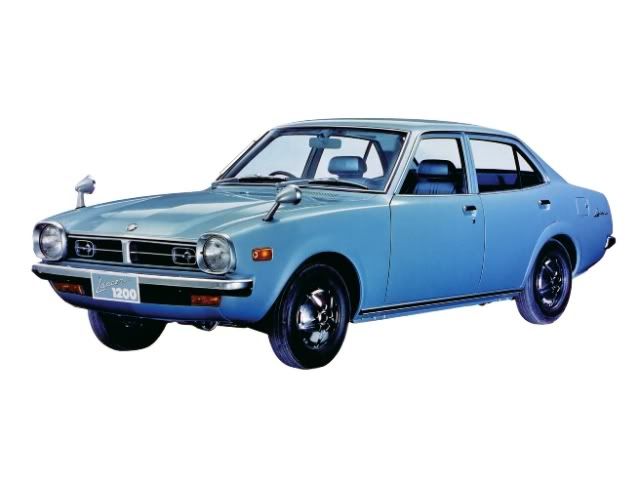
Mitsubishi Lancer 1200
In “1200” form, the Lancer is available in “Standard”, “EL” and “GL” forms. The base “Standard” is a simplified Lancer that is only available as a two-door, with white the only paint choice.
Photobucket
● Introduction: January 1973. Construction: unibody. Engine: water-cooled inline four, 1.2-litre, 70 hp, mounted at the front. Transmission: to the rear wheels through a four-speed manual gearbox. Suspension: independent at the front, rigid axle at the rear. Brakes: hydraulic, to drums on all four wheels. Length: 396 cm. Top speed: n/a. Range: two-door saloon, four-door saloon.


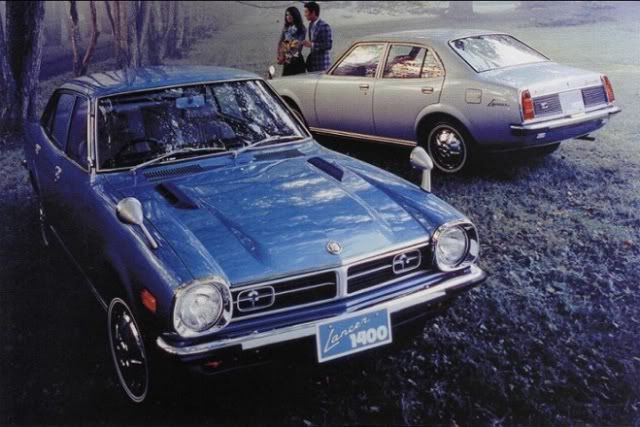
Mitsubishi Lancer 1400
The Lancer 1400 is available in “EL”, “GL” and “SL-5” trim. As the latter’s name implies, it receives a five-speed gearbox, along with a three-spoke steering wheel, fog lights and a leather upholstery.
Photobucket
● Introduction: January 1973. Construction: unibody. Engine: water-cooled inline four, 1.4-litre, 92 hp, mounted at the front. Transmission: to the rear wheels through a four-speed manual gearbox. Five-speed manual gearbox optional. Suspension: independent at the front, rigid axle at the rear. Brakes: hydraulic, to drums on all four wheels. Discs on front wheels optional. Length: 396 cm. Top speed: n/a. Range: two-door saloon, four-door saloon.


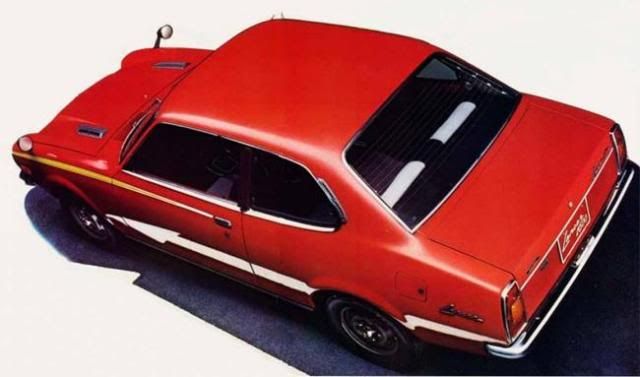
Mitsubishi Lancer 1600 GSL
The “1600 GSL” is the performance version of the Lancer, fitted with a powerful 1.6-litre “Saturn engine”. From July 1973, an optional “Sport Kit” becomes optional.
Photobucket
● Introduction: January 1973. Construction: unibody. Engine: water-cooled inline four, 1.6-litre, 100 hp, mounted at the front. Transmission: to the rear wheels through a five-speed manual gearbox. Suspension: independent at the front, rigid axle at the rear. Brakes: hydraulic, to discs on front wheels, drums on rear wheels. Length: 396 cm. Top speed: n/a. Range: two-door saloon.


Any mistake you’ve just spotted? A detail to add? A suggestion? Don’t hesitate to leave a comment!

Click to jump to another model year of the same car: 1973 1974 1975 1976 1977 1978 – 1979 – 1980 – 1981 – 1982 – 1983 – 1984 – 1985
Click here to return to a list of all Mitsubishi vehicles presented on this blog.
Click here to return to this blog’s initial post, featuring a list of all vehicles already presented.


1978 Mitsubishi Lancer and Celeste

Nineteen seventy-eight sees some slight cosmetic changes being applied to both the Lancer and the Celeste.

In July 1977, the Celeste coupe receives mild modifications that include new rectangular taillights and, less visible but more significant, cleaner “MCA-Jet” engines. Again in April 1978, the Celeste is face-lifted, more deeply this time as the thicker bumpers already seen on its American version are grafted onto it, while its headlights are now square. Simultaneously, these bumpers are made available on 1200 and 1400cc cars fitted with the new “GL-Extra” trim, and all 1600cc Lancers. Finally, the range is simplified as most two-door saloon variants disappear, the four-door having proved much more popular during these last two years.


Mitsubishi Lancer 1200
A simplified “1200 Standard” returns to the Lancer range for 1978. As it used to be previously, it is exclusively offered as a two-door saloon with limited equipment. It is indeed the only Lancer to retain basic drum brakes on all four wheels. Other trims are the “Populaire”, the “GL” and the “SL-5”, the latter two being now exclusively available as four-door cars. From April 1978, a plush “GL-Extra” trim is added, easily identifiable from its oversized bumpers.
Photobucket
● Introduction: January 1973. Construction: unibody. Engine: water-cooled inline four, 1.2-litre, 70 hp, mounted at the front. On “Van” estates: inline four, 1.2-litre, 73 hp standard. Transmission: to the rear wheels through a four-speed manual gearbox. Five-speed manual gearbox optional. Suspension: independent at the front, rigid axle at the rear. Brakes: hydraulic, to drums on all four wheels. Discs on front wheels optional. Length: 400 cm (411 cm from April 1978 on GL-Extra). Top speed: n/a. Range: two-door saloon, four-door saloon, four-door “Van” estate.


Mitsubishi Lancer 1400
The Lancer 1400 is available in two different trims: “GL” (four-speed manual transmission standard, but automatic optional), and “SL-5” (five-speed manual transmission exclusively). In April 1978, the traditional “Saturn” engine is replaced by a new generation “Orion”. Here too, a “GL-Extra” trim is added in April 1978.
Photobucket
● Introduction: January 1973. Construction: unibody. Engine: water-cooled inline four, 1.4-litre, 82 hp (80 hp from April 1978), mounted at the front. On “Van” estates: inline four, 1.4-litre, 85 hp standard. Transmission: to the rear wheels through a four-speed manual gearbox. Five-speed manual and three-speed automatic gearboxes optional. Suspension: independent at the front, rigid axle at the rear. Brakes: hydraulic, to discs on front wheels, drums on rear wheels. Length: 400 cm (411 cm from April 1978 on GL-Extra). Top speed: n/a. Range: four-door saloon, four-door “Van” estate.


Mitsubishi Lancer 1600
From April 1978, a plush “GL-Extra” trim is added to the sporty “GSL” version, but both are now exclusively available as four-door saloons since the two-door disappears.
Photobucket
● Introduction: January 1973. Construction: unibody. Engine: water-cooled inline four, 1.6-litre, 86 hp, mounted at the front. Transmission: to the rear wheels through a five-speed manual gearbox. Suspension: independent at the front, rigid axle at the rear. Brakes: hydraulic, to discs on front wheels, drums on rear wheels. Length: 400 cm (411 cm from April 1978). Top speed: n/a. Range: four-door saloon.


Mitsubishi Lancer 1600 GSR
The GSR is the street version of the rally car that made itself famous for its performances in such events as the harsh Safari Rally.
Photobucket
● Introduction: January 1973. Construction: unibody. Engine: water-cooled inline four, 1.6-litre, 100 hp, mounted at the front. Transmission: to the rear wheels through a five-speed manual gearbox. Suspension: independent at the front, rigid axle at the rear. Brakes: hydraulic, to discs on front wheels, drums on rear wheels. Length: 400 cm (411 cm from April 1978). Top speed: n/a. Range: two-door saloon.


Mitsubishi Celeste 1400
Using the platform and mechanical parts of its Lancer, Mitsubishi has devised this elegant coupe.
● Introduction: February 1975. Construction: unibody. Engine: water-cooled inline four, 1.4-litre, 82 hp (80 hp from April 1978), mounted at the front. Transmission: to the rear wheels through a four-speed manual gearbox. Five-speed manual gearbox optional. Suspension: independent at the front, rigid axle at the rear. Brakes: hydraulic, to discs on front wheels, drums on rear wheels. Length: 412 cm (until April 1978), 416 cm (from April 1978). Top speed: n/a. Range: two-door hatchback coupe.


Mitsubishi Celeste 1600
Photobucket
● Introduction: February 1975. Construction: unibody. Engine: water-cooled inline four, 1.6-litre, 86 hp, mounted at the front. Transmission: to the rear wheels through a five-speed manual gearbox. Suspension: independent at the front, rigid axle at the rear. Brakes: hydraulic, to discs on front wheels, drums on rear wheels. Length: 412 cm (until April 1978), 416 cm (from April 1978). Top speed: n/a. Range: two-door hatchback coupe.


Mitsubishi Celeste 1600 GT System 80
A limited edition of the Celeste 1600 GT is released for this year. Reserved to the Japanese market, this GT System 80 is identified by its black paint with golden decoration and wheels. Most options are standard here, plus an equipment that is not available on any other model: a very advanced stereo system with AM/FM radio and cassette player that will satisfy the most discriminating music lover. Two hundred of these cars are constructed.
Photobucket
● Introduction: February 1975 for the Celeste, November 1977 for the 1600 GT System 80. Construction: unibody. Engine: water-cooled inline four, 1.6-litre, 86 hp, mounted at the front. Transmission: to the rear wheels through a five-speed manual gearbox. Suspension: independent at the front, rigid axle at the rear. Brakes: hydraulic, to discs on front wheels, drums on rear wheels. Length: 412 cm. Top speed: n/a. Range: two-door hatchback coupe.


Mitsubishi Celeste 1600 GSR
The Celeste also has its own GSR version, fitted with the very same 1600cc engine as the Lancer model of the same name.
Photobucket
● Introduction: February 1975. Construction: unibody. Engine: water-cooled inline four, 1.6-litre, 100 hp, mounted at the front. Transmission: to the rear wheels through a five-speed manual gearbox. Suspension: independent at the front, rigid axle at the rear. Brakes: hydraulic, to discs on front wheels, drums on rear wheels. Length: 412 cm (until April 1978), 416 cm (from April 1978). Top speed: n/a. Range: two-door hatchback coupe.


Any mistake you’ve just spotted? A detail to add? A suggestion? Don’t hesitate to leave a comment!

Click to jump to another model year of the same car: 1973 1974 1975 1976 1977 1978 – 1979 – 1980 – 1981 – 1982 – 1983 – 1984 – 1985
Click here to return to a list of all Mitsubishi vehicles presented on this blog.
Click here to return to this blog’s initial post, featuring a list of all vehicles already presented.


1977 Mitsubishi Lancer and Celeste

Now widely sold in the United States as Chrysler group’s own captive import under the name Dodge Colt, the Lancer receives its first major face-lift, that includes a new grille without fog lights, turn signals moved to the bumper, and large rectangular taillights replacing the L-shaped units used previously. The steering wheel can now be tilted to better fit any driver. Simultaneously, the trim arrangement of the Lancer range is modified.

During spring 1977, the base 1.2-litre “Saturn” engine is replaced by a new “Orion” block of similar displacement, answering the yet stricter emission rules that the Japanese authorities are setting up. The Saturn remains the only available 1200cc engine for Lancer estates, though. In June, that is the turn of the “Saturn” 1.4-litre engine to be updated to “MCA-Jet” standards.


Mitsubishi Lancer 1200
A new “Populaire” trim is the Lancer’s cheapest offer, topped by the “GL” and an “SL-5” offering a five-speed gearbox.
Photobucket
● Introduction: January 1973. Construction: unibody. Engine: water-cooled inline four, 1.2-litre, 73 hp (70 hp from April 1977), mounted at the front. On “Van” estates: inline four, 1.2-litre, 80 hp standard. Transmission: to the rear wheels through a four-speed manual gearbox. Five-speed manual gearbox optional. Suspension: independent at the front, rigid axle at the rear. Brakes: hydraulic, to discs on front wheels, drums on rear wheels. Length: 400 cm. Top speed: n/a. Range: two-door saloon, four-door saloon, four-door “Van” estate.


Mitsubishi Lancer 1400
The Lancer 1400 is available in two different trims: “GL” (four-speed manual transmission standard, but automatic optional), and “SL-5” (five-speed manual transmission exclusively).
Photobucket
● Introduction: January 1973. Construction: unibody. Engine: water-cooled inline four, 1.4-litre, 85 hp (82 hp from June 1977), mounted at the front. On “Van” estates: inline four, 1.4-litre, 92 hp standard. Transmission: to the rear wheels through a four-speed manual gearbox. Five-speed manual and three-speed automatic gearboxes optional. Suspension: independent at the front, rigid axle at the rear. Brakes: hydraulic, to discs on front wheels, drums on rear wheels. Length: 400 cm. Top speed: n/a. Range: two-door saloon, four-door saloon, four-door “Van” estate.


Mitsubishi Lancer 1600 GSL
The “1600 GSL” is the performance version of the Lancer, fitted with a powerful 1.6-litre “Saturn engine”.
Photobucket
● Introduction: January 1973. Construction: unibody. Engine: water-cooled inline four, 1.6-litre, 92 hp (86 hp from June 1977), mounted at the front. Transmission: to the rear wheels through a five-speed manual gearbox. Suspension: independent at the front, rigid axle at the rear. Brakes: hydraulic, to discs on front wheels, drums on rear wheels. Length: 400 cm. Top speed: n/a. Range: two-door saloon, four-door saloon.


Mitsubishi Lancer 1600 GSR
The GSR is the street version of the car Mitsubishi’s works team enters in selected events of the World’s Rally Championship.
Photobucket
● Introduction: January 1973. Construction: unibody. Engine: water-cooled inline four, 1.6-litre, 100 hp, mounted at the front. Transmission: to the rear wheels through a five-speed manual gearbox. Suspension: independent at the front, rigid axle at the rear. Brakes: hydraulic, to discs on front wheels, drums on rear wheels. Length: 400 cm. Top speed: n/a. Range: two-door saloon.


Mitsubishi Lancer Celeste 1400
Using the platform and mechanical parts of its Lancer, Mitsubishi has devised this elegant coupe. For 1977, all Celestes receive a vertical badge that divides the front grille in two halves.
Photobucket
● Introduction: February 1975. Construction: unibody. Engine: water-cooled inline four, 1.4-litre, 85 hp, mounted at the front. Transmission: to the rear wheels through a four-speed manual gearbox. Five-speed manual gearbox optional. Suspension: independent at the front, rigid axle at the rear. Brakes: hydraulic, to discs on front wheels, drums on rear wheels. Length: 412 cm. Top speed: n/a. Range: two-door hatchback coupe.


Mitsubishi Lancer Celeste 1600
A new Celeste 1600 GT is added to the range this year.
Photobucket
● Introduction: February 1975. Construction: unibody. Engine: water-cooled inline four, 1.6-litre, 92 hp, mounted at the front. Transmission: to the rear wheels through a four-speed manual gearbox. Five-speed manual gearbox optional. Suspension: independent at the front, rigid axle at the rear. Brakes: hydraulic, to discs on front wheels, drums on rear wheels. Length: 412 cm. Top speed: n/a. Range: two-door hatchback coupe.


Mitsubishi Lancer Celeste 1600 GSR
The Celeste also has its own GSR version, fitted with the very same 1600cc engine as the Lancer model of the same name.
● Introduction: February 1975. Construction: unibody. Engine: water-cooled inline four, 1.6-litre, 100 hp, mounted at the front. Transmission: to the rear wheels through a five-speed manual gearbox. Suspension: independent at the front, rigid axle at the rear. Brakes: hydraulic, to discs on front wheels, drums on rear wheels. Length: 412 cm. Top speed: n/a. Range: two-door hatchback coupe.


Any mistake you’ve just spotted? A detail to add? A suggestion? Don’t hesitate to leave a comment!

Click to jump to another model year of the same car: 1973 1974 1975 1976 1977 1978 – 1979 – 1980 – 1981 – 1982 – 1983 – 1984 – 1985
Click here to return to a list of all Mitsubishi vehicles presented on this blog.
Click here to return to this blog’s initial post, featuring a list of all vehicles already presented.


1976 Mitsubishi Lancer and Celeste

The “Neptune” 1.2-litre four that equips the base Lancer saloons is replaced in October 1975 by a version of the “Saturn” offering a similar displacement, but ten more horsepower. “Van” estates retain their older “Neptune” ones. During the following month, all Lancers and Celestes adopts low-emission “MCA” (Mitsubishi Clean Air) versions of their engines in order to comply with the stricter emission standards now enforced in Japan.


Mitsubishi Lancer 1200
While the “EL” is a simplified version of the 1200, the “GL” enjoys a better equipment that includes front disc brakes and a five-speed gearbox.
Photobucket
● Introduction: January 1973. Construction: unibody. Engine: water-cooled inline four, 1.2-litre, 80 hp (73 hp from November 1975), mounted at the front. On “Van” estates: inline four, 1.2-litre, 70 hp standard. Transmission: to the rear wheels through a four-speed manual gearbox. Five-speed manual gearbox optional. Suspension: independent at the front, rigid axle at the rear. Brakes: hydraulic, to drums on all four wheels. Discs on front wheels optional. Length: 396 cm. Top speed: n/a. Range: two-door saloon, four-door saloon, four-door “Van” estate.


Mitsubishi Lancer 1400
The Lancer 1400 is available in three different trims: “EL” (drum brakes and four-speed), “GL” (front disc brakes, automatic transmission optional), and “SL-5” (front disc brakes, five-speed manual transmission exclusively). The latter also receives a three-spoke steering wheel, fog lights and a leather upholstery.
Photobucket
● Introduction: January 1973. Construction: unibody. Engine: water-cooled inline four, 1.4-litre, 92 hp (85 hp from November 1975 on saloons), mounted at the front. Transmission: to the rear wheels through a four-speed manual gearbox. Five-speed manual and three-speed automatic gearboxes optional. Suspension: independent at the front, rigid axle at the rear. Brakes: hydraulic, to drums on all four wheels. Discs on front wheels optional. Length: 396 cm. Top speed: n/a. Range: two-door saloon, four-door saloon, four-door “Van” estate.


Mitsubishi Lancer 1600 GSL
The “1600 GSL” is the performance version of the Lancer, fitted with a powerful 1.6-litre “Saturn engine”.
Photobucket
● Introduction: January 1973. Construction: unibody. Engine: water-cooled inline four, 1.6-litre, 100 hp (92 hp from November 1975), mounted at the front. Transmission: to the rear wheels through a five-speed manual gearbox. Suspension: independent at the front, rigid axle at the rear. Brakes: hydraulic, to discs on front wheels, drums on rear wheels. Length: 396 cm. Top speed: n/a. Range: two-door saloon, four-door saloon.


Mitsubishi Lancer 1600 GSR
The GSR is the street version of the car Mitsubishi’s works team enters in selected events of the World’s Rally Championship.
Photobucket
● Introduction: January 1973. Construction: unibody. Engine: water-cooled inline four, 1.6-litre, 110 hp (100 hp from November 1975), mounted at the front. Transmission: to the rear wheels through a five-speed manual gearbox. Suspension: independent at the front, rigid axle at the rear. Brakes: hydraulic, to discs on front wheels, drums on rear wheels. Length: 396 cm. Top speed: n/a. Range: two-door saloon.


Mitsubishi Lancer Celeste 1400
Using the platform and mechanical parts of its Lancer, Mitsubishi has devised this elegant coupe.
Photobucket
● Introduction: February 1975. Construction: unibody. Engine: water-cooled inline four, 1.4-litre, 85 hp, mounted at the front. Transmission: to the rear wheels through a four-speed manual gearbox. Five-speed manual gearbox optional. Suspension: independent at the front, rigid axle at the rear. Brakes: hydraulic, to discs on front wheels, drums on rear wheels. Length: 412 cm. Top speed: n/a. Range: two-door hatchback coupe.


Mitsubishi Lancer Celeste 1600
Photobucket
● Introduction: February 1975. Construction: unibody. Engine: water-cooled inline four, 1.6-litre, 92 hp, mounted at the front. Transmission: to the rear wheels through a four-speed manual gearbox. Five-speed manual gearbox optional. Suspension: independent at the front, rigid axle at the rear. Brakes: hydraulic, to discs on front wheels, drums on rear wheels. Length: 412 cm. Top speed: n/a. Range: two-door hatchback coupe.


Mitsubishi Lancer Celeste 1600 GSR
The Celeste also has its own GSR version, fitted with the very same 1600cc engine as the Lancer model of the same name.
Photobucket
● Introduction: February 1975. Construction: unibody. Engine: water-cooled inline four, 1.6-litre, 100 hp, mounted at the front. Transmission: to the rear wheels through a five-speed manual gearbox. Suspension: independent at the front, rigid axle at the rear. Brakes: hydraulic, to discs on front wheels, drums on rear wheels. Length: 412 cm. Top speed: n/a. Range: two-door hatchback coupe.


Any mistake you’ve just spotted? A detail to add? A suggestion? Don’t hesitate to leave a comment!

Click to jump to another model year of the same car: 1973 1974 1975 1976 1977 1978 – 1979 – 1980 – 1981 – 1982 – 1983 – 1984 – 1985
Click here to return to a list of all Mitsubishi vehicles presented on this blog.
Click here to return to this blog’s initial post, featuring a list of all vehicles already presented.


1975 Mitsubishi Lancer and Celeste

The Lancer receives a very mild update in October 1974, which includes much larger L-shaped taillights on saloons. A new dashboard is also introduced, while an air conditioning system is a rare option for a car in this price range.

Biggest news for this model year come in February 1975 though, when Mitsubishi unveils an elegant hatchback coupe based on the Lancer’s chassis. Generally known as the Celeste, it is more exactly called Lancer Celeste by its manufacturer on its domestic market.


Mitsubishi Lancer 1200
While the “EL” is a simplified version of the 1200, the “GL” enjoys a better equipment that includes front disc brakes.
● Introduction: January 1973. Construction: unibody. Engine: water-cooled inline four, 1.2-litre, 70 hp, mounted at the front. Transmission: to the rear wheels through a four-speed manual gearbox. Suspension: independent at the front, rigid axle at the rear. Brakes: hydraulic, to drums on all four wheels. Discs on front wheels optional. Length: 396 cm. Top speed: n/a. Range: two-door saloon, four-door saloon, four-door “Van” estate.


Mitsubishi Lancer 1400
The Lancer 1400 is available in three different trims: “EL” (drum brakes and four-speed), “GL” (front disc brakes, automatic transmission optional), and “SL-5” (front disc brakes, five-speed manual transmission exclusively). The latter also receives a three-spoke steering wheel, fog lights and a leather upholstery.
Photobucket
● Introduction: January 1973. Construction: unibody. Engine: water-cooled inline four, 1.4-litre, 92 hp, mounted at the front. Transmission: to the rear wheels through a four-speed manual gearbox. Five-speed manual and three-speed automatic gearboxes optional. Suspension: independent at the front, rigid axle at the rear. Brakes: hydraulic, to drums on all four wheels. Discs on front wheels optional. Length: 396 cm. Top speed: n/a. Range: two-door saloon, four-door saloon, four-door “Van” estate.


Mitsubishi Lancer 1600 GSL
The “1600 GSL” is the performance version of the Lancer, fitted with a powerful 1.6-litre “Saturn” engine.
Photobucket
● Introduction: January 1973. Construction: unibody. Engine: water-cooled inline four, 1.6-litre, 100 hp, mounted at the front. Transmission: to the rear wheels through a five-speed manual gearbox. Suspension: independent at the front, rigid axle at the rear. Brakes: hydraulic, to discs on front wheels, drums on rear wheels. Length: 396 cm. Top speed: n/a. Range: two-door saloon, four-door saloon.


Mitsubishi Lancer 1600 GSR
The GSR is the street version of the car Mitsubishi’s works team enters in selected events of the World’s Rally Championship.
Photobucket
● Introduction: January 1973. Construction: unibody. Engine: water-cooled inline four, 1.6-litre, 110 hp, mounted at the front. Transmission: to the rear wheels through a five-speed manual gearbox. Suspension: independent at the front, rigid axle at the rear. Brakes: hydraulic, to discs on front wheels, drums on rear wheels. Length: 396 cm. Top speed: n/a. Range: two-door saloon.


Mitsubishi Lancer Celeste 1400
The new Mitsubishi Lancer Celeste takes the place of the failed Galant GTO. In “1400” guise, two trims are available: “GL” (four-speed manual gearbox) or “GSL” (five-speed).
● Introduction: February 1975. Construction: unibody. Engine: water-cooled inline four, 1.4-litre, 92 hp, mounted at the front. Transmission: to the rear wheels through a four-speed manual gearbox. Five-speed manual gearbox optional. Suspension: independent at the front, rigid axle at the rear. Brakes: hydraulic, to discs on front wheels, drums on rear wheels. Length: 412 cm. Top speed: n/a. Range: two-door hatchback coupe.


Mitsubishi Lancer Celeste 1600
Two versions of the Celeste 1600, GL (four-speed manual gearbox) and XL (five-speed), can be ordered. Apart from known Saturn engines taken from the Lancer, the Celeste proposes with the GL trim a new low-emission “MCA” (Mitsubishi Clean Air) engine, a low-rated version of its 1.6-litre four.
Photobucket
● Introduction: February 1975. Construction: unibody. Engine: water-cooled inline four, 1.6-litre, 100 hp, mounted at the front. Optional engine: inline four, 1.6-litre, 92 hp. Transmission: to the rear wheels through a four-speed manual gearbox. Five-speed manual gearbox optional. Suspension: independent at the front, rigid axle at the rear. Brakes: hydraulic, to discs on front wheels, drums on rear wheels. Length: 412 cm. Top speed: n/a. Range: two-door hatchback coupe.


Mitsubishi Lancer Celeste 1600 GSR
The Celeste also has its own GSR version, fitted with the very same 1600cc engine as the Lancer model of the same name.
Photobucket
● Introduction: February 1975. Construction: unibody. Engine: water-cooled inline four, 1.6-litre, 110 hp, mounted at the front. Transmission: to the rear wheels through a five-speed manual gearbox. Suspension: independent at the front, rigid axle at the rear. Brakes: hydraulic, to discs on front wheels, drums on rear wheels. Length: 412 cm. Top speed: n/a. Range: two-door hatchback coupe.


Any mistake you’ve just spotted? A detail to add? A suggestion? Don’t hesitate to leave a comment!

Click to jump to another model year of the same car: 1973 1974 1975 1976 1977 1978 – 1979 – 1980 – 1981 – 1982 – 1983 – 1984 – 1985
Click here to return to a list of all Mitsubishi vehicles presented on this blog.
Click here to return to this blog’s initial post, featuring a list of all vehicles already presented.


1974 Mitsubishi Lancer

Nineteen seventy-four sees Mitsubishi develop its new Lancer range. Right on top stands a new GSR, the street version of the rally car that now replaces the Galant in international racing events. The GSL, which used to be the Lancer’s most powerful version, now exists as a four-door saloon. A three-speed automatic transmission is available with the 1.4-litre engine, as Mitsubishi starts to export this car to America. Finally, a “Van” version, actually an estate, is also added to the original saloons.


Mitsubishi Lancer 1200
In “1200” form, the Lancer is available in “EL” and “GL” forms, the base “Standard” disappearing this year. While the “EL” retains four drum brakes, the “GL” now enjoys discs at the front.
● Introduction: January 1973. Construction: unibody. Engine: water-cooled inline four, 1.2-litre, 70 hp, mounted at the front. Transmission: to the rear wheels through a four-speed manual gearbox. Suspension: independent at the front, rigid axle at the rear. Brakes: hydraulic, to drums on all four wheels. Length: 396 cm. Top speed: n/a. Range: two-door saloon, four-door saloon, four-door “Van” estate (from September 1973).


Mitsubishi Lancer 1400
The Lancer 1400 is available in “EL”, “GL” and “SL-5” trim. As the latter’s name implies, it receives a five-speed gearbox, along with a three-spoke steering wheel, fog lights and a leather upholstery. The new automatic gearbox is reserved to the four-door version of the GL.
Photobucket
● Introduction: January 1973. Construction: unibody. Engine: water-cooled inline four, 1.4-litre, 92 hp, mounted at the front. Transmission: to the rear wheels through a four-speed manual gearbox. Five-speed manual and three-speed automatic gearboxes optional. Suspension: independent at the front, rigid axle at the rear. Brakes: hydraulic, to drums on all four wheels. Discs on front wheels optional. Length: 396 cm. Top speed: n/a. Range: two-door saloon, four-door saloon, four-door “Van” estate (from September 1973).


Mitsubishi Lancer 1600 GSL
The “1600 GSL” is the performance version of the Lancer, fitted with a powerful 1.6-litre “Saturn engine”.
● Introduction: January 1973. Construction: unibody. Engine: water-cooled inline four, 1.6-litre, 100 hp, mounted at the front. Transmission: to the rear wheels through a five-speed manual gearbox. Suspension: independent at the front, rigid axle at the rear. Brakes: hydraulic, to discs on front wheels, drums on rear wheels. Length: 396 cm. Top speed: n/a. Range: two-door saloon, four-door saloon.


Mitsubishi Lancer 1600 GSR
The new GSR is the street version of the car Mitsubishi’s works team enters this year in selected events of the World’s Rally Championship. The output of its Saturn engine is boosted by the use of two Solex two-barrel carburettors. Three-point seatbelts are provided, among other extra equipments.
Photobucket
● Introduction: January 1973 for the original Lancer, August 1973 for the GSR. Construction: unibody. Engine: water-cooled inline four, 1.6-litre, 110 hp, mounted at the front. Transmission: to the rear wheels through a five-speed manual gearbox. Suspension: independent at the front, rigid axle at the rear. Brakes: hydraulic, to discs on front wheels, drums on rear wheels. Length: 396 cm. Top speed: n/a. Range: two-door saloon.


Any mistake you’ve just spotted? A detail to add? A suggestion? Don’t hesitate to leave a comment!

Click to jump to another model year of the same car: 1973 1974 1975 1976 1977 1978 – 1979 – 1980 – 1981 – 1982 – 1983 – 1984 – 1985
Click here to return to a list of all Mitsubishi vehicles presented on this blog.
Click here to return to this blog’s initial post, featuring a list of all vehicles already presented.


Saturday, April 7, 2012

1975 Mitsubishi Debonair

Now an ageing automobile, the Mitsubishi Debonair should further remain in production, as seems to indicate the recent face-lift to which it has been subjected.


Mitsubishi Debonair
Photobucket
● Introduction: October 1963. Construction: unibody. Engine: water-cooled inline six, 2.0-litre, 130 hp, mounted at the front. Transmission: to the rear wheels through a four-speed manual gearbox. Three-speed automatic optional. Suspension: independent at the front, rigid axle at the rear. Brakes: hydraulic, to discs on front wheels, drums on rear wheels. Length: 467 cm. Top speed: 180 kph. Range: four-door “Executive” saloon.


Any mistake you’ve just spotted? A detail to add? A suggestion? Don’t hesitate to leave a comment!

Click to jump to another model year of the same car: 1964 1965 1966 1967 1968 1969 1970 1971 1972 1973 1974 1975 – 1976 – 1977 – 1978 – 1979 – 1980 – 1981 – 1982 – 1983 – 1984 – 1985 – 1986
Click here to return to a list of all Mitsubishi vehicles presented on this blog.
Click here to return to this blog’s initial post, featuring a list of all vehicles already presented.


1974 Mitsubishi Debonair

Exactly ten years after its birth, the Mitsubishi Debonair is subjected to a slight face-lift, which includes new taillights, the deletion of front doors’ vent windows, and the repositioning of the front turn signals.


Mitsubishi Debonair
Photobucket
● Introduction: October 1963. Construction: unibody. Engine: water-cooled inline six, 2.0-litre, 130 hp, mounted at the front. Transmission: to the rear wheels through a four-speed manual gearbox. Three-speed automatic optional. Suspension: independent at the front, rigid axle at the rear. Brakes: hydraulic, to discs on front wheels, drums on rear wheels. Length: 467 cm. Top speed: 180 kph. Range: four-door “Executive” saloon.


Any mistake you’ve just spotted? A detail to add? A suggestion? Don’t hesitate to leave a comment!

Click to jump to another model year of the same car: 1964 1965 1966 1967 1968 1969 1970 1971 1972 1973 1974 1975 – 1976 – 1977 – 1978 – 1979 – 1980 – 1981 – 1982 – 1983 – 1984 – 1985 – 1986
Click here to return to a list of all Mitsubishi vehicles presented on this blog.
Click here to return to this blog’s initial post, featuring a list of all vehicles already presented.


1973 Mitsubishi Debonair

The Mitsubishi Debonair, which ageing design had been based on the Lincoln Continental from the Sixties, continues to be a favourite of Japanese executives and government officials.


Mitsubishi Debonair
● Introduction: October 1963. Construction: unibody. Engine: water-cooled inline six, 2.0-litre, 130 hp, mounted at the front. Transmission: to the rear wheels through a four-speed manual gearbox. Three-speed automatic optional. Suspension: independent at the front, rigid axle at the rear. Brakes: hydraulic, to discs on front wheels, drums on rear wheels. Length: 467 cm. Top speed: 180 kph. Range: four-door “Executive” saloon.


Any mistake you’ve just spotted? A detail to add? A suggestion? Don’t hesitate to leave a comment!

Click to jump to another model year of the same car: 1964 1965 1966 1967 1968 1969 1970 1971 1972 1973 1974 1975 – 1976 – 1977 – 1978 – 1979 – 1980 – 1981 – 1982 – 1983 – 1984 – 1985 – 1986
Click here to return to a list of all Mitsubishi vehicles presented on this blog.
Click here to return to this blog’s initial post, featuring a list of all vehicles already presented.


1972 Mitsubishi Debonair

The Mitsubishi Debonair, which ageing design had been based on the Lincoln Continental from the Sixties, continues to be a favourite of Japanese executives and government officials.


Mitsubishi Debonair
Photobucket
● Introduction: October 1963. Construction: unibody. Engine: water-cooled inline six, 2.0-litre, 130 hp, mounted at the front. Transmission: to the rear wheels through a four-speed manual gearbox. Three-speed automatic optional. Suspension: independent at the front, rigid axle at the rear. Brakes: hydraulic, to discs on front wheels, drums on rear wheels. Length: 467 cm. Top speed: 180 kph. Range: four-door “Executive” saloon.


Any mistake you’ve just spotted? A detail to add? A suggestion? Don’t hesitate to leave a comment!

Click to jump to another model year of the same car: 1964 1965 1966 1967 1968 1969 1970 1971 1972 1973 1974 1975 – 1976 – 1977 – 1978 – 1979 – 1980 – 1981 – 1982 – 1983 – 1984 – 1985 – 1986
Click here to return to a list of all Mitsubishi vehicles presented on this blog.
Click here to return to this blog’s initial post, featuring a list of all vehicles already presented.


1971 Mitsubishi Debonair

Due to production cost, the Debonair’s previous 2.0-litre “KE64” engine is replaced from September 1970 by another six-cylinder block, the SOHC short-stroke “Saturn Six” of similar displacement, based on widely-produced four-cylinders. This new Debonair Executive enjoys higher performance thanks to this more potent engine.


Mitsubishi Debonair
Photobucket
● Introduction: October 1963. Construction: unibody. Engine: water-cooled inline six, 2.0-litre, 130 hp, mounted at the front. Transmission: to the rear wheels through a four-speed manual gearbox. Three-speed automatic optional. Suspension: independent at the front, rigid axle at the rear. Brakes: hydraulic, to discs on front wheels, drums on rear wheels. Length: 467 cm. Top speed: 180 kph. Range: four-door “Executive” saloon.


Any mistake you’ve just spotted? A detail to add? A suggestion? Don’t hesitate to leave a comment!

Click to jump to another model year of the same car: 1964 1965 1966 1967 1968 1969 1970 1971 1972 1973 1974 1975 – 1976 – 1977 – 1978 – 1979 – 1980 – 1981 – 1982 – 1983 – 1984 – 1985 – 1986
Click here to return to a list of all Mitsubishi vehicles presented on this blog.
Click here to return to this blog’s initial post, featuring a list of all vehicles already presented.


1970 Mitsubishi Debonair

Recently fitted with front disc brakes, the Mitsubishi Debonair remains in production relatively unchanged from the original model, which has appeared six years ago.


Mitsubishi Debonair
Photobucket
● Introduction: October 1963. Construction: unibody. Engine: water-cooled inline six, 2.0-litre, 105 hp, mounted at the front. With automatic: inline six, 2.0-litre, 90 hp. Transmission: to the rear wheels through a four-speed manual gearbox. Three-speed automatic optional. Suspension: independent at the front, rigid axle at the rear. Brakes: hydraulic, to discs on front wheels, drums on rear wheels. Length: 467 cm. Top speed: 135 kph (automatic), 155 kph (manual). Range: four-door saloon.


Any mistake you’ve just spotted? A detail to add? A suggestion? Don’t hesitate to leave a comment!

Click to jump to another model year of the same car: 1964 1965 1966 1967 1968 1969 1970 1971 1972 1973 1974 1975 – 1976 – 1977 – 1978 – 1979 – 1980 – 1981 – 1982 – 1983 – 1984 – 1985 – 1986
Click here to return to a list of all Mitsubishi vehicles presented on this blog.
Click here to return to this blog’s initial post, featuring a list of all vehicles already presented.


1969 Mitsubishi Debonair

In April 1969, disc brakes are fitted at the front wheels of the big Debonair, which also receives brand new wheels. Mitsubishi ’s flagship car is slightly modified at the rear, which wings lose their typical side lights.


Mitsubishi Debonair
Photobucket
● Introduction: October 1963. Construction: unibody. Engine: water-cooled inline six, 2.0-litre, 105 hp, mounted at the front. With automatic: inline six, 2.0-litre, 90 hp. Transmission: to the rear wheels through a four-speed manual gearbox. Three-speed automatic optional. Suspension: independent at the front, rigid axle at the rear. Brakes: hydraulic, to drums on all four wheels. From April 1969, discs on front wheels, drums on rear wheels. Length: 467 cm. Top speed: 135 kph (automatic), 155 kph (manual). Range: four-door saloon.


Any mistake you’ve just spotted? A detail to add? A suggestion? Don’t hesitate to leave a comment!

Click to jump to another model year of the same car: 1964 1965 1966 1967 1968 1969 1970 1971 1972 1973 1974 1975 – 1976 – 1977 – 1978 – 1979 – 1980 – 1981 – 1982 – 1983 – 1984 – 1985 – 1986
Click here to return to a list of all Mitsubishi vehicles presented on this blog.
Click here to return to this blog’s initial post, featuring a list of all vehicles already presented.


1968 Mitsubishi Debonair

The large Debonair receives a padded dashboard for increased safety. Mitsubishi engineers grab the opportunity to slightly alter the said dashboard design.


Mitsubishi Debonair
Photobucket
● Introduction: October 1963. Construction: unibody. Engine: water-cooled inline six, 2.0-litre, 105 hp, mounted at the front. With automatic: inline six, 2.0-litre, 90 hp. Transmission: to the rear wheels through a four-speed manual gearbox. Three-speed automatic optional. Suspension: independent at the front, rigid axle at the rear. Brakes: hydraulic, to drums on all four wheels. Length: 467 cm. Top speed: 135 kph (automatic), 155 kph (manual). Range: four-door saloon.


Any mistake you’ve just spotted? A detail to add? A suggestion? Don’t hesitate to leave a comment!

Click to jump to another model year of the same car: 1964 1965 1966 1967 1968 1969 1970 1971 1972 1973 1974 1975 – 1976 – 1977 – 1978 – 1979 – 1980 – 1981 – 1982 – 1983 – 1984 – 1985 – 1986
Click here to return to a list of all Mitsubishi vehicles presented on this blog.
Click here to return to this blog’s initial post, featuring a list of all vehicles already presented.


1967 Mitsubishi Debonair

The largest Mitsubishi is this Debonair, which mostly seduces executives and government officials - relatively few are bought by private individuals.


Mitsubishi Debonair
Photobucket
● Introduction: October 1963. Construction: unibody. Engine: water-cooled inline six, 2.0-litre, 105 hp, mounted at the front. With automatic: inline six, 2.0-litre, 90 hp. Transmission: to the rear wheels through a four-speed manual gearbox. Three-speed automatic optional. Suspension: independent at the front, rigid axle at the rear. Brakes: hydraulic, to drums on all four wheels. Length: 467 cm. Top speed: 135 kph (automatic), 155 kph (manual). Range: four-door saloon.


Any mistake you’ve just spotted? A detail to add? A suggestion? Don’t hesitate to leave a comment!

Click to jump to another model year of the same car: 1964 1965 1966 1967 1968 1969 1970 1971 1972 1973 1974 1975 – 1976 – 1977 – 1978 – 1979 – 1980 – 1981 – 1982 – 1983 – 1984 – 1985 – 1986
Click here to return to a list of all Mitsubishi vehicles presented on this blog.
Click here to return to this blog’s initial post, featuring a list of all vehicles already presented.


1966 Mitsubishi Debonair

The largest Mitsubishi is this Debonair, which mostly seduces executives and government officials - relatively few are bought by private individuals.


Mitsubishi Debonair
Photobucket
● Introduction: October 1963. Construction: unibody. Engine: water-cooled inline six, 2.0-litre, 105 hp, mounted at the front. With automatic: inline six, 2.0-litre, 90 hp. Transmission: to the rear wheels through a four-speed manual gearbox. Three-speed automatic optional. Suspension: independent at the front, rigid axle at the rear. Brakes: hydraulic, to drums on all four wheels. Length: 467 cm. Top speed: 135 kph (automatic), 155 kph (manual). Range: four-door saloon.


Any mistake you’ve just spotted? A detail to add? A suggestion? Don’t hesitate to leave a comment!

Click to jump to another model year of the same car: 1964 1965 1966 1967 1968 1969 1970 1971 1972 1973 1974 1975 – 1976 – 1977 – 1978 – 1979 – 1980 – 1981 – 1982 – 1983 – 1984 – 1985 – 1986
Click here to return to a list of all Mitsubishi vehicles presented on this blog.
Click here to return to this blog’s initial post, featuring a list of all vehicles already presented.


1965 Mitsubishi Debonair

Late during the model year, the large Debonair saloon receives a Borg-Warner automatic transmission as an option to the standard four-speed manual gearbox with column-mounted shifter. Other new options include many power-assisted items, such as power steering, power windows or power bucket seats.


Mitsubishi Debonair
Photobucket
● Introduction: October 1963. Construction: unibody. Engine: water-cooled inline six, 2.0-litre, 105 hp, mounted at the front. With automatic: inline six, 2.0-litre, 90 hp. Transmission: to the rear wheels through a four-speed manual gearbox. Three-speed automatic optional (from May 1965). Suspension: independent at the front, rigid axle at the rear. Brakes: hydraulic, to drums on all four wheels. Length: 467 cm. Top speed: 135 kph (automatic), 155 kph (manual). Range: four-door saloon.


Any mistake you’ve just spotted? A detail to add? A suggestion? Don’t hesitate to leave a comment!

Click to jump to another model year of the same car: 1964 1965 1966 1967 1968 1969 1970 1971 1972 1973 1974 1975 – 1976 – 1977 – 1978 – 1979 – 1980 – 1981 – 1982 – 1983 – 1984 – 1985 – 1986
Click here to return to a list of all Mitsubishi vehicles presented on this blog.
Click here to return to this blog’s initial post, featuring a list of all vehicles already presented.


1964 Mitsubishi Debonair

After its rivals Nissan, Prince and Toyota have unveiled large saloons aimed at the executive market, Mitsubishi follows suite with the six-cylinder OHV Debonair. Though designed under the responsibility of an ex-GM employee, Hans Bretzner, it actually reveals a strong influence from the Lincoln Continental. Though its dimensions are impressive by Japanese standards, it strictly follows the regulations drawn by the Nippon government regarding vehicles’ size. Furthermore, it can easily manoeuvre through narrow Tokyo streets thanks to an extremely tight turn radius.


Mitsubishi Debonair
Photobucket
● Introduction: October 1963 (introduction), April 1964 (production). Construction: unibody. Engine: water-cooled inline six, 2.0-litre, 105 hp, mounted at the front. Transmission: to the rear wheels through a four-speed manual gearbox. Suspension: independent at the front, rigid axle at the rear. Brakes: hydraulic, to drums on all four wheels. Length: 467 cm. Top speed: 155 kph. Range: four-door saloon.


Any mistake you’ve just spotted? A detail to add? A suggestion? Don’t hesitate to leave a comment!

Click to jump to another model year of the same car: 1964 1965 1966 1967 1968 1969 1970 1971 1972 1973 1974 1975 – 1976 – 1977 – 1978 – 1979 – 1980 – 1981 – 1982 – 1983 – 1984 – 1985 – 1986
Click here to return to a list of all Mitsubishi vehicles presented on this blog.
Click here to return to this blog’s initial post, featuring a list of all vehicles already presented.